Our website uses cookies to enhance and personalize your experience and to display advertisements (if any). Our website may also include third party cookies such as Google Adsense, Google Analytics, Youtube. By using the website, you consent to the use of cookies. We have updated our Privacy Policy. Please click the button to view our Privacy Policy.

International

Why climate lawsuits are increasing worldwide

Global Surge in Climate Lawsuits: Explained

Societies are increasingly turning to the courts to confront climate change, and the past decade has seen a sharp rise in climate‑related litigation fueled by escalating impacts, more robust scientific links between emissions and damage, evolving legal arguments, activist tactics, and changes in corporate and financial governance; this article outlines the primary drivers behind these cases, the legal avenues plaintiffs pursue, key illustrative examples, emerging geographic trends, and the practical implications for governments, businesses, and communities.Key forces fueling the growth of climate litigationClearer scientific attribution: Advances in attribution science and climate modeling make it increasingly possible to link specific extreme…
Read More
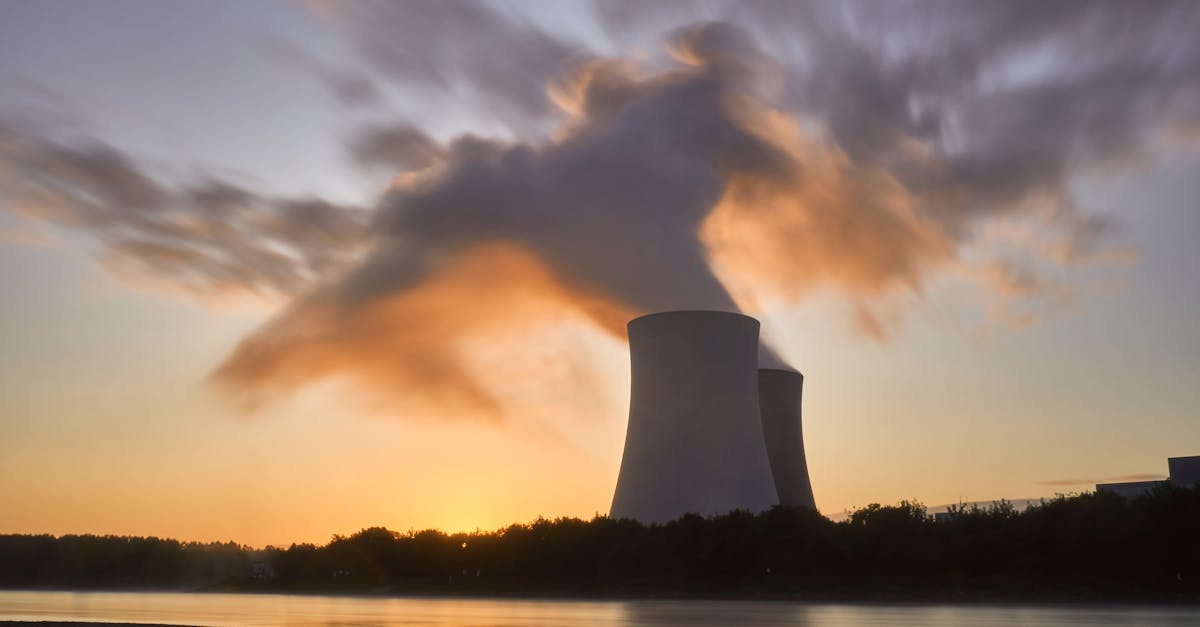
What safeguards exist in modern nuclear power

The Return of Nuclear Energy to Public Scrutiny

Nuclear power has re-emerged as a central topic in public and policy debates worldwide. Multiple intersecting forces — climate targets, energy security concerns, technological advances, market signals, and shifting public opinion — have combined to bring nuclear energy back into focus. The discussion is no longer purely ideological; it now centers on practical trade-offs and how to achieve deep decarbonization while maintaining reliable electricity supplies.Main factors fueling the resurgence of interestClimate commitments: Governments and corporations pursuing mid-century net-zero goals increasingly require substantial volumes of dependable, low‑carbon power. With its almost negligible operational CO2 emissions, nuclear is positioned to deliver both…
Read More
Por qué los océanos importan para el clima y la economía

The Ocean’s Role in Climate Change and Economic Growth

Oceans as the planet’s dominant climate regulatorThe global ocean covers roughly 71% of Earth’s surface and acts as the primary regulator of climate. It absorbs and redistributes heat and carbon, moderating atmospheric temperature swings, determining weather patterns, and sustaining life-supporting biogeochemical cycles. Two fundamental roles stand out:Heat storage: The ocean has absorbed most of the surplus heat generated by greenhouse gas emissions—widely assessed as exceeding 90% of the planet’s accumulated excess warmth—thereby tempering atmospheric temperature rises while introducing long-lasting thermal inertia that commits the climate system to future shifts.Carbon sink: The ocean takes in a substantial share of CO2 released…
Read More
How standards shape trade and who gets locked out

Standards as Gatekeepers: Trade Access and Disadvantage

Standards encompass the rules, specifications, testing approaches, and conformity procedures that define the qualities products and services must meet to access a market, covering everything from technical requirements for home appliances and sanitary guidelines for meat to data‑protection practices and private sustainability certifications set by multinational purchasers. By cutting information imbalances and enhancing interoperability, well‑crafted standards can reduce transaction costs, strengthen consumer confidence, and stimulate trade. Yet these same standards may also function, deliberately or not, as obstacles that limit rivals, divide markets, and alter global value chains. Their distributional consequences are significant, as the gains, burdens, and exclusions they…
Read More
What loss and damage means in climate negotiations

What “Loss and Damage” Signifies in Climate Debates

Loss and damage in international climate talks refers to the harms caused by climate change that go beyond what people, communities, and countries can adapt to. It covers both sudden extreme events (storms, floods, wildfires) and slow-onset processes (sea level rise, desertification, glacial retreat). The concept addresses the residual impacts that remain after mitigation and adaptation efforts — and the responsibility for responding to those impacts.Key dimensions and definitionsEconomic losses: measurable financial costs such as destroyed infrastructure, lost crops, rebuilding expenses, declines in GDP and market disruptions.Non-economic losses: impacts that are hard or impossible to price, including loss of life,…
Read More
Why recycling alone won’t solve plastic pollution

The Truth About Recycling: Why Plastic Pollution Persists

Plastic recycling is often depicted as a catch‑all solution to plastic pollution, but the reality is considerably more complex. Although recycling provides significant benefits, it cannot by itself eradicate plastic waste because of technical, economic, behavioral, and systemic limitations. This article examines these constraints, offers relevant evidence and illustrations, and underscores complementary strategies that must accompany recycling to create lasting change.The current scale: production, waste, and what recycling actually achievesGlobal plastic production has surged to well over 350 million metric tons annually in recent years. A landmark assessment of historical production and waste revealed that, of all plastics manufactured through…
Read More
What’s failing in the global plastics response

Addressing the Shortcomings in Global Plastics Policy

Global efforts to address plastics have delivered limited progress, while numerous challenges persist. Production keeps climbing, waste management remains underfunded, policies lean too much on voluntary measures from industry, and many touted technical solutions fail to confront the underlying drivers. Consequently, plastic pollution continues to intensify, fossil-fuel dependencies deepen, and social and environmental damages grow—most acutely in low- and middle-income countries.Failure 1 — Production keeps growing while policy focuses on end-of-lifeThe conversation remains tilted toward waste management and recycling while production of new plastics marches upward. Global production is on the order of hundreds of millions of tonnes per year…
Read More
Why biodiversity is an economic security issue

How Biodiversity Impacts Economic Security

Biodiversity, encompassing the richness of life found in genes, species and ecosystems, is far from an abstract environmental notion reserved for researchers or conservation advocates. It forms the foundation for the products, services and stability that contemporary economies rely upon. When biodiversity erodes, repercussions spread through supply networks, strain public finances, disrupt corporate accounts and influence national security. Viewing biodiversity as an economic security concern shifts it from a conservation focus to a core pillar of both national and global economic stability.How biodiversity links to economic securityProvisioning services and supply chains. Biodiversity delivers essential resources including food, timber, medicinal compounds,…
Read More
What critical minerals are and why they’re contested

Understanding Critical Minerals: Why They’re So Highly Contested

Critical minerals are naturally occurring elements and compounds that modern economies depend on for manufacturing, energy transition, and defense, but that face concentrated or fragile supply chains. Governments and analysts typically assess criticality by weighing two dimensions: the mineral’s economic importance for key technologies and the risk that supply will be disrupted. That combination — high demand and high vulnerability — is what makes a mineral “critical.”Why they are important todayAs the world accelerates toward electrification, renewable power, digital networks and sophisticated defense technologies, the need for specific minerals has surged. Lithium, cobalt, nickel and graphite form the backbone of…
Read More
How tech export controls affect companies and consumers

Impact of Tech Export Policies on Businesses and Shoppers

Tech export controls are government rules that restrict the sale, transfer, or sharing of certain technologies across borders. They target items ranging from physical components and finished devices to software, source code, and technical know-how. Governments deploy these controls for national security, economic sanctions, and human rights reasons. The effects are felt across corporate strategies, supply chains, innovation ecosystems, and everyday consumer choices.How export controls operateExport controls operate through several familiar mechanisms:Product and technology classification: governments assign specific codes or categories, such as dual-use or military, that define whether an item needs formal licensing.Licensing and authorization: exporters are required to…
Read More