
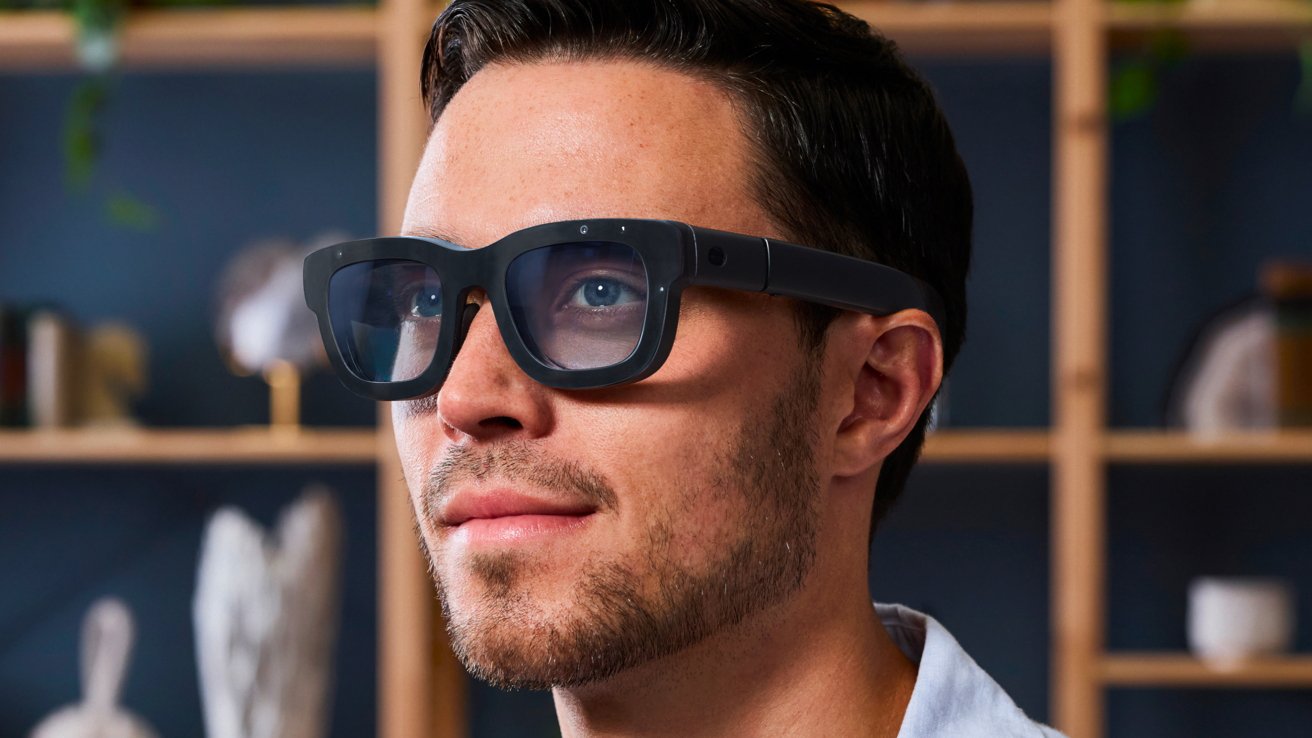
Augmented reality glasses and spatial computing platforms are shifting from specialized experimental gear to indispensable computing tools, a change driven by advances in hardware miniaturization, artificial intelligence, connectivity, and mature software ecosystems, all coming together to redefine how digital interactions blend with the physical environment and how people work, learn, and interact with information.
Prioritizing Miniaturization and Wearability in Core Design
New developments focus on crafting lighter, more wearable AR glasses that resemble everyday eyewear far more closely. Earlier headsets tended to be bulky and demanded substantial power, which hindered their widespread use. Current versions highlight better weight distribution, slimmer waveguides, and components designed for greater energy efficiency.
- MicroLED and advanced OLED displays enable higher brightness with lower energy consumption.
- Custom silicon, often designed in-house by major platform providers, reduces heat and improves battery life.
- Optical waveguide improvements allow wider fields of view without increasing lens thickness.
These improvements are vital for enabling broader use cases, from navigation and intricate enterprise workflows to long-lasting social interaction.
AI-Driven Contextual Insights and Advanced On-Device Intelligence
Artificial intelligence is rapidly becoming the core engine behind spatial computing, as modern AR glasses increasingly rely on built‑in AI to assess their surroundings, recognize objects, and swiftly interpret what users intend to do.
- Computer vision systems produce spatial representations of interiors, surfaces, and items, ensuring digital components are aligned accurately.
- Natural language processing supports dialogue-based interactions that substitute for traditional menus or tangible controls.
- Personalization engines adjust material based on user activity, geographic context, and unique preferences.
For instance, enterprise AR platforms can deliver instant object recognition that detects machinery components and projects guided steps, helping reduce both training time and errors.
Spatial Operating Systems and Integrated Platform Ecosystems
Spatial computing has shifted past a hardware‑only focus and now depends on advanced operating systems and robust developer ecosystems, with spatial operating systems increasingly treating three‑dimensional environments as the primary layer of user interaction.
Key characteristics include:
- Long-lasting spatial anchors designed to retain the placement of digital items from one session to the next.
- Integrated development frameworks enabling applications to operate seamlessly on glasses, headsets, tablets, and desktop systems.
- Application marketplaces and revenue models crafted specifically for immersive environments.
This platform approach mirrors the evolution of smartphones, where strong ecosystems ultimately determined market leaders.
Bringing Together Cloud and Edge Computing
AR glasses are now often built as lightweight front-end devices that tap into robust cloud and edge systems, minimizing the requirement for intensive local processing while still supporting sophisticated capabilities.
- Edge computing minimizes latency, improving spatial mapping performance and supporting immediate collaborative interactions.
- Cloud rendering produces high-fidelity 3D imagery that surpasses what local hardware can generate.
- Shared spatial environments allow several users to observe and interact with the same digital components simultaneously.
Industrial and design teams are already leveraging these capabilities to collaborate on 3D models from different continents, speeding up development timelines and lowering travel expenses.
Enterprise-Led Adoption Accelerating Organizational Maturity
Although consumer adoption keeps expanding, enterprise-oriented requirements increasingly shape major platform decisions, with industries like manufacturing, healthcare, logistics, and field services delivering demonstrable returns on investment.
- Remote support platforms help cut equipment downtime and lower travel costs.
- AR-directed assembly and maintenance enhance precision and overall efficiency.
- Medical visualization solutions assist with surgical preparation and training.
Industry analysts’ market data repeatedly indicates that enterprise AR implementations can yield task‑focused productivity improvements ranging from 20 to 30 percent.
Ethical Design, Privacy Safeguards, and Security Practices
As AR glasses continually scan their environments, escalating concerns around privacy and security are shaping technological innovation and regulatory measures, leading platforms to introduce more explicit recording indicators, increased on‑device data processing, and tighter permission management.
Current developments in this field encompass:
- On-device computation that helps reduce unwarranted data transfers.
- Enterprise-level encryption applied to spatial mapping and visual information.
- Design guidelines that clearly indicate when cameras or sensors are operating.
Trust is steadily emerging as a crucial factor that sets consumer-facing products apart.
Open Standards and Effortless Interoperability
A further significant trend involves strengthening interoperability among devices and platforms, as developers and enterprises increasingly seek standards that minimize lock-in and enable the sharing of spatial data.
- Versatile, open file formats created for handling 3D assets and spatial mapping tasks.
- Cross-platform APIs that enable tracking, gesture-based interactions, and the application of spatial anchors.
- Seamless interoperability spanning AR glasses, mixed reality headsets, and mobile devices.
This trend strengthens ecosystem health and hastens innovation by reducing development hurdles.
The Broader Shift Toward Ambient Computing
AR glasses and spatial computing platforms are part of a broader move toward ambient computing, where technology recedes into the background and responds naturally to human behavior. Screens are no longer confined to rectangles; instead, information appears where and when it is needed.
The merging of lightweight devices, advanced software, and interconnected infrastructure suggests a future where digital layers flow naturally into the physical world, and as these innovations progress, spatial computing is set to become as fundamental as mobile tech, reshaping daily life not with dramatic gestures but through a subtle, constant integration.