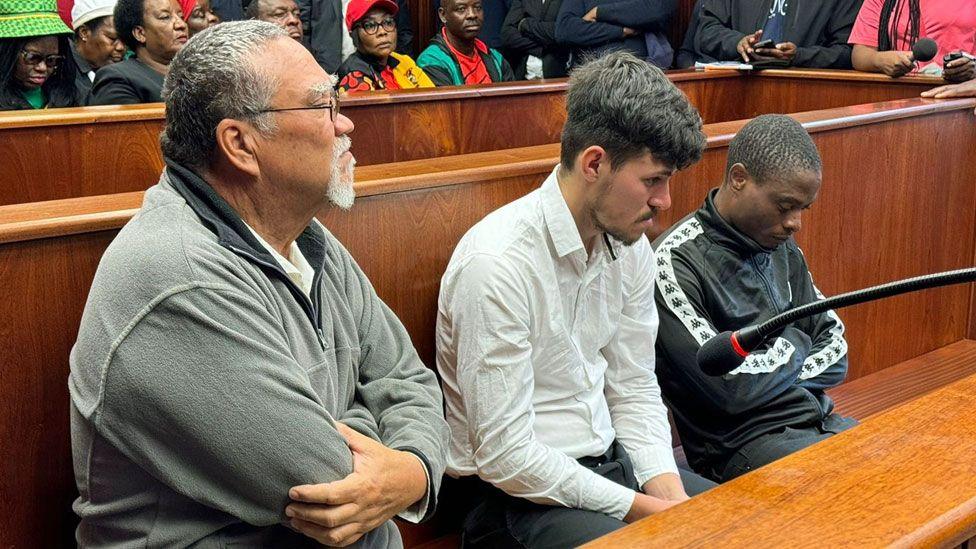
In South Africa, a court case has attracted both national and international interest because of its unsettling accusations and the wider societal issues it highlights. A white farmer is being tried for allegedly killing two Black women, with the prosecution claiming that he tried to get rid of their corpses by feeding them to pigs on his land. This trial has become central to discussions on racial violence, land rights, and justice in the post-apartheid era in South Africa.
The defendant, who manages and runs a business farm in a rural area of the nation, has entered a plea of not guilty to the allegations, which encompass two murder charges, hindering justice, and infringing on personal dignity. The prosecution alleges that the farm manager deliberately targeted the victims, two Black women in their twenties, and committed the offenses on his land before going to great lengths to hide the events.
Based on legal records and declarations by the investigative bodies, the pair of women had been declared missing several days prior to the discovery of their remains. Specialists in forensics subsequently matched body fragments resembling human remains located in a pigpen on the suspect’s estate. Genetic analysis verified the victims’ identities, whose relatives had expressed worries regarding their absence following a reported visit to the location for job-related activities.
In initial hearings, the prosecution presented a haunting series of events, claiming that the farm owner enticed the women to the location under deceptive circumstances before perpetrating the assaults. Witnesses have offered testimony indicating past incidents of verbal harassment and biased conduct by the defendant towards employees and local residents, which the prosecutors contend shows intent and planning.
The defense, on the other hand, has dismissed these allegations, describing the defendant as a reputable entrepreneur with no previous offenses. His defense team has cast doubt on the investigation’s credibility, accusing improper evidence handling and witness intimidation. They argue that the defendant was not involved in the victims’ fatalities and propose that another individual might have deposited the remains on the property.
As the trial unfolds, the courtroom has transformed into an emotional battleground, with relatives of the deceased seeking responsibility and justice. Outside the courthouse, demonstrators have assembled multiple times, insisting that the case be managed transparently and swiftly. Certain protestors have portrayed the case as indicative of a broader issue of violence against Black South Africans, particularly women, in rural areas where law enforcement and supervision are frequently lacking.
South Africa has a complex and painful history with race relations, particularly when it comes to the legacy of apartheid-era land distribution and the ongoing tensions between white landowners and Black residents in rural regions. This case has reignited longstanding debates about racial justice, gender-based violence, and the power dynamics that persist in farming areas. Activists and community leaders argue that the violence cannot be viewed in isolation but must be considered within the broader context of structural inequality and historic trauma.
Legal specialists observing the trial emphasize that the verdict could establish a significant precedent for handling similar crimes in South Africa. The case has captured the attention of human rights groups and worldwide observers who track racial equity and the rights of women in the area. Numerous individuals have voiced worries about the security of at-risk groups in poorly-equipped regions, where violence linked to gender and race frequently remains unreported or insufficiently investigated.
In response to public concern, the South African Police Service has stated that it is conducting a thorough and impartial investigation. Authorities have pledged to allocate the necessary forensic resources and ensure that all procedural steps are followed properly. Government officials have also acknowledged the outcry and emphasized the importance of ensuring accountability in cases involving marginalized victims.
The widespread national dialogue ignited by this trial involves revived appeals for change in rural law enforcement, enhanced assistance for survivors of gender-related violence, and fairer land regulations. Certain legislators have suggested broadening rural justice programs and enhancing availability of legal support in isolated areas, where people frequently do not have the means to seek justice on their own.
While they wait, the victim’s families persist in their quest for answers and closure. Communicating via legal representatives and regional media, they have shared their sorrow, anger, and a longing for justice that exceeds mere retribution — justice that recognizes the worth of the lives tragically lost and the wider suffering faced by communities dealing with similar challenges.
While the trial progresses, it serves as a challenge for South Africa to address complex realities concerning race, violence, and authority. As the judicial process evaluates the evidence and discussions, the general population will keep a close eye, wishing for a conclusion that upholds the value of equal legal protection and the respect for every person, irrespective of race, gender, or social standing.