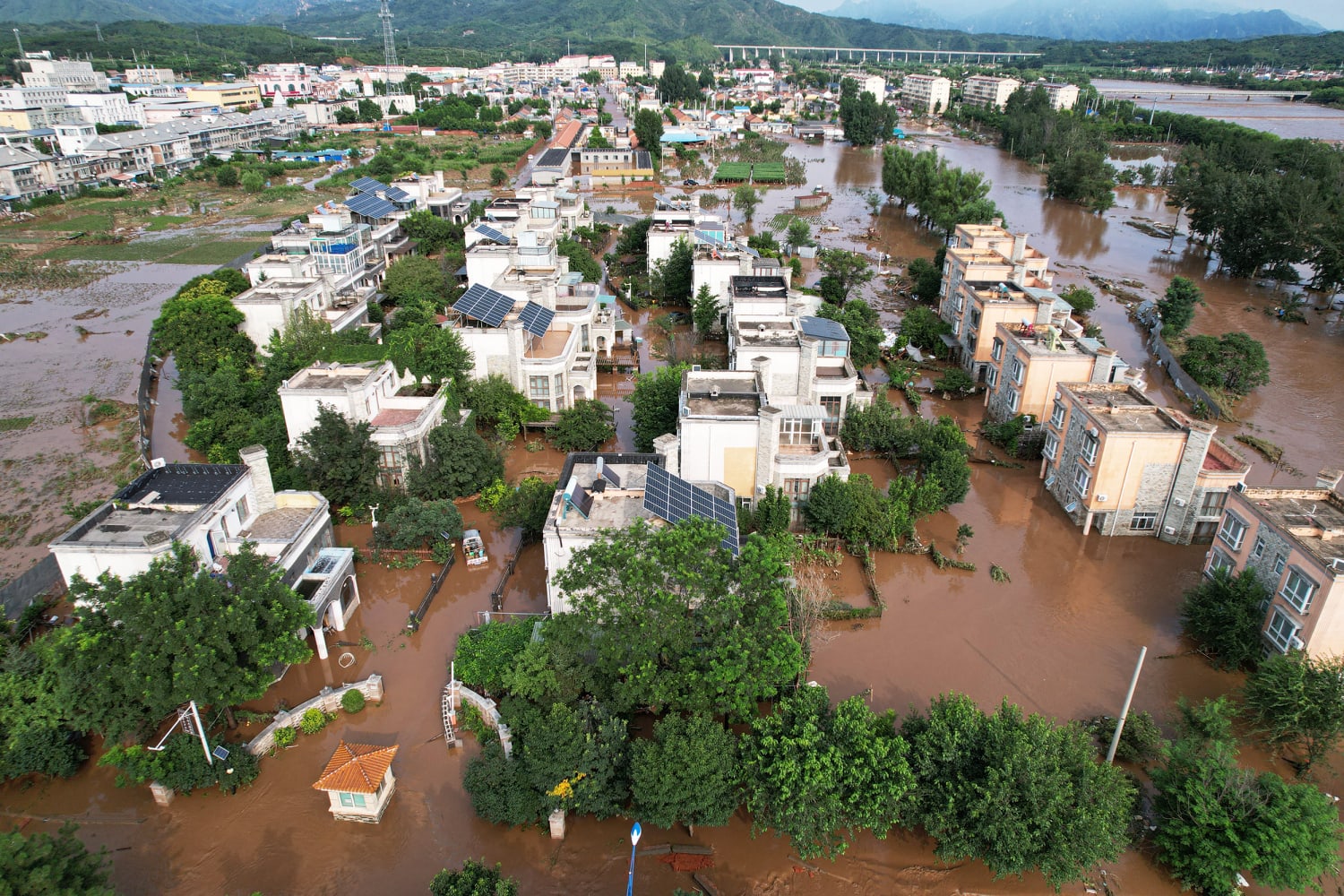
Severe flooding has devastated areas in and around Beijing, leading to significant loss of life and widespread disruption. According to local authorities, at least 38 people have died as a result of the extreme weather, which brought rainfall levels close to what the region typically receives over an entire year. The disaster marks one of the most intense flooding events in recent memory for the Chinese capital and its surrounding provinces.
Triggered by a powerful storm system that stalled over northern China, the deluge caused rivers to overflow, neighborhoods to submerge, and critical infrastructure to buckle under pressure. Roads became rivers, subway lines were shut down, and rescue workers struggled to reach trapped residents as floodwaters rose quickly across urban and rural zones alike.
The extraordinary amount of rain—recorded in certain regions at close to 750 millimeters (30 inches) within several days—has inundated both natural terrains and city drainage systems. Weather experts observed that although summer storms are typical in northern China, the severity and length of this occurrence were far beyond historical averages. Several monitoring locations observed unprecedented rainfall levels, heightening ongoing worries about the rising occurrence of severe weather conditions associated with climate change.
Among the most affected regions were the suburban areas in the western part of Beijing and sections of the adjacent Hebei Province. Numerous deaths happened due to houses falling down or cars being carried off by rising waters. Emergency services mobilized thousands of first responders, including military forces, to help with evacuations, provide assistance, and strengthen vulnerable infrastructure.
In a deeply unfortunate event, a team of emergency personnel trying to evacuate residents was unexpectedly overtaken by a rapid increase, leading to numerous fatalities. Their sacrifice has been broadly acknowledged as a powerful reminder of the risks encountered by those operating on the forefront of disaster response.
Thousands of people have been displaced from their homes and are now residing in temporary shelters. The flooding has also disrupted transportation, suspended industrial operations, and damaged crops, raising concerns about the longer-term economic and humanitarian impact. Local governments have pledged financial assistance to affected families, while national agencies have dispatched additional resources to accelerate recovery efforts.
Beijing’s urban layout, marked by a mix of modern high-rises and older low-lying neighborhoods, posed unique challenges during the floods. Despite recent investments in drainage systems, the city’s infrastructure proved insufficient to handle rainfall of this magnitude. Urban planners have acknowledged the need for more resilient systems capable of managing extreme weather, particularly in light of shifting climate patterns.
Satellite images captured before and after the storm show dramatic changes in landscape: once-bustling highways turned into stagnant lakes, and agricultural zones now resemble wetlands. Environmental experts warn that recovery may take months, especially in flood-prone lowlands where water recedes slowly.
Simultaneously, health authorities are on the lookout for additional hazards like illnesses transmitted through water, pollution of potable water, and the proliferation of mold in moist structures. Medical personnel have been sent to impacted regions, provided with urgent supplies and mobile medical units.
This disaster comes amid broader national efforts to strengthen China’s disaster preparedness and climate adaptation strategies. Recent years have seen multiple provinces endure climate-related disasters ranging from floods to droughts and wildfires. Experts are calling for more proactive planning, including early warning systems, investment in sustainable urban design, and improved coordination between municipal and provincial governments.
The government has declared a period of mourning for the lives lost and is conducting detailed investigations into how response protocols can be improved. In a statement issued following the disaster, national leaders emphasized the importance of prioritizing public safety and modernizing critical infrastructure.
While the immediate focus remains on search and rescue efforts, attention is also turning to questions about long-term resilience. How can rapidly growing cities like Beijing adapt to increasingly erratic weather? What policies are needed to ensure that new developments are flood-resistant? And how should communities be educated and equipped to handle emergencies?
This flood serves as a stark reminder of nature’s power and the urgent need to adapt urban environments to withstand the unpredictable impacts of climate change. It also underscores the importance of community solidarity and preparedness in times of crisis.
As cleanup operations continue and the nation begins to assess the full scope of the disaster, stories of survival and heroism are also emerging. Volunteers, medical personnel, neighbors, and strangers have come together to provide food, shelter, and support, showing resilience in the face of tragedy.
The long road to recovery has begun, but for many, the scars left by the flood—both physical and emotional—will endure. In the weeks and months ahead, rebuilding efforts will focus not only on restoring damaged buildings but also on reinforcing the systems needed to prevent future disasters of this scale.
Ultimately, the catastrophic flooding in the Beijing region is more than a weather event; it is a call to action. As communities mourn, rebuild, and adapt, the lessons learned here may help shape a safer and more prepared future.