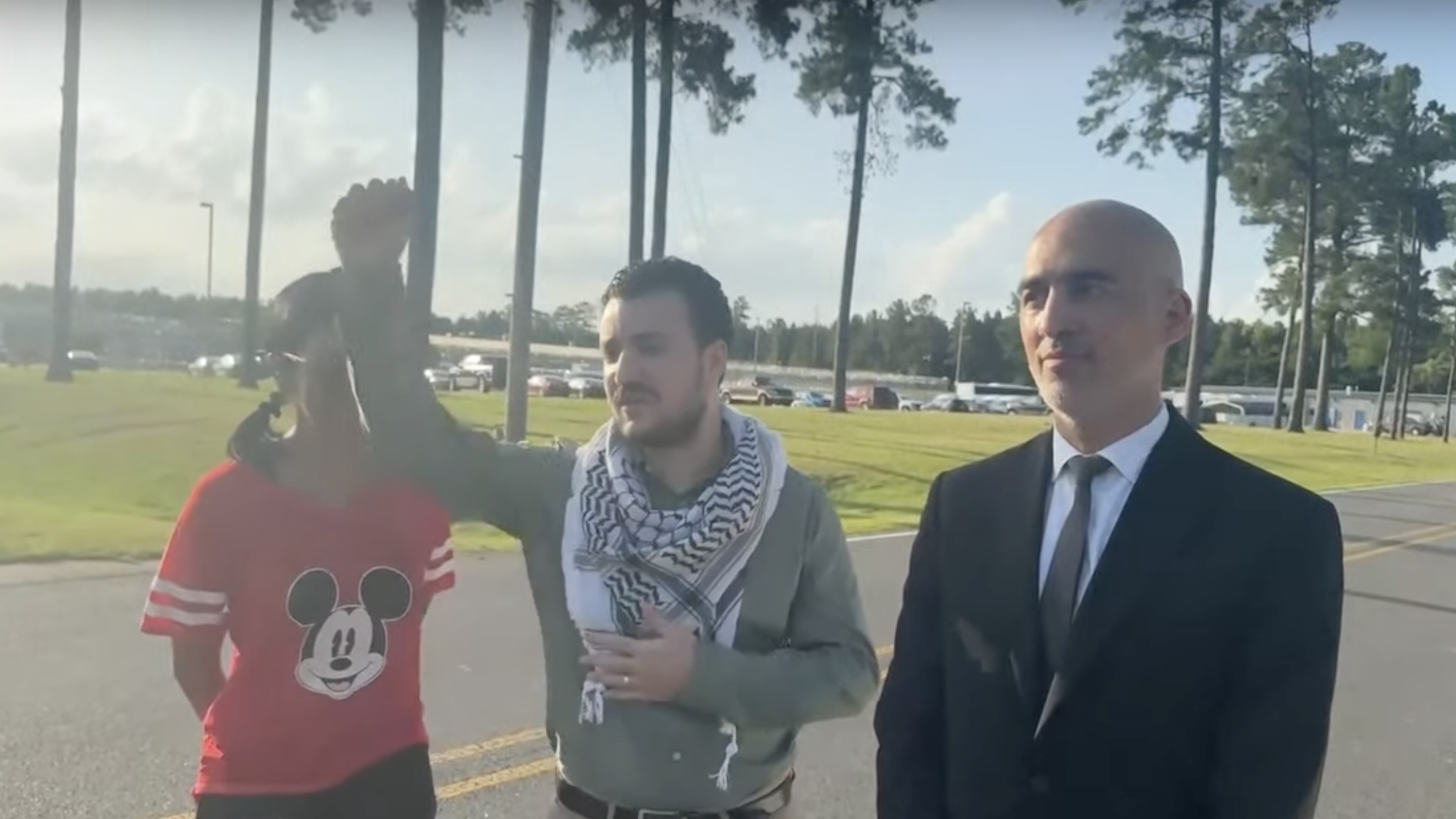
Mahmoud Khalil, a Palestinian activist who gained international attention during his detention by U.S. Immigration and Customs Enforcement (ICE), has spoken about the time he spent in custody, the obstacles he encountered, and his steadfast conviction in eventually achieving his freedom. Discussing his experience openly, Khalil reflected on the emotional and physical impact of his extended detention and the wider significance of his case for immigration justice and human rights.
Khalil’s ordeal began when he was detained by ICE, an event that quickly sparked concern among immigrant rights advocates and members of the Palestinian-American community. His case highlighted the complex intersection of immigration enforcement, political activism, and civil liberties in the United States. Despite the legal and bureaucratic hurdles he encountered, Khalil maintained hope throughout his detention, confident that justice would ultimately be on his side.
The activist described the day of his detention as one filled with confusion and disbelief. For Khalil, who had spent years advocating for Palestinian rights and working within his community, being taken into custody felt surreal. He recounted the immediate sense of isolation and fear that accompanied his transfer to an ICE facility, where he would remain for several months without certainty about his future.
While detained, Khalil encountered several challenges, such as having limited access to legal representation, restricted contact with his family, and the stress of being held for an undefined period. The uncertainty of his detention duration took a significant emotional toll, compounded by being apart from his loved ones. Despite this, he drew resilience from his convictions and the encouragement he received from beyond the facility.
Khalil highlighted that his unshakeable faith in justice and the awareness of not being isolated in his fight were what kept him going during his imprisonment. Supportive messages flowed from human rights groups, activists, and the public, many of whom considered his detention unfair and representative of broader systemic challenges in U.S. immigration policy.
His situation, though distinct in certain ways, highlighted the widespread issue of extended immigration detention within the United States. Supporters emphasized that numerous people in ICE custody, such as asylum seekers and those without criminal records, frequently endure prolonged detention without definite timelines or transparent procedures. Khalil’s ordeal brought these issues to light and ignited fresh demands for changes in immigration policy.
During the time Khalil spent in confinement, he contemplated the connections between his own hardships and the wider challenges faced by Palestinians living under occupation and forced migration. He talked about the enduring spirit that has defined the Palestinian community for years, and how this very spirit aided him in withstanding the difficult conditions of confinement. For Khalil, this was more than an individual struggle; it was a component of a broader story of endurance against injustice.
Khalil’s eventual release came after sustained public pressure, legal advocacy, and the tireless efforts of his supporters. While he expressed deep gratitude for those who stood by him, he also noted that many others remain in similar situations without the same visibility or support. His story, he hopes, can shine a light on the often-overlooked plight of detainees and inspire action to bring about meaningful change.
Now liberated, Khalil has recommenced his activism with a renewed emphasis on immigration justice and Palestinian rights. He has committed to using his voice and experience to speak on behalf of those still in detention and to oppose policies he perceives as unjust and discriminatory. His message centers on resilience, dignity, and the conviction that change is achievable when individuals unite to demand it.
Khalil also discussed the emotional aftermath of his detention. Although physically free, he acknowledged that the psychological effects of confinement linger. He described moments of anxiety, difficulty readjusting to daily life, and the lingering fear of re-detention. Nevertheless, he remains committed to healing and to continuing his advocacy work with renewed determination.
His case has also raised important questions about the role of political activism in immigration enforcement. Some observers have suggested that his detention may have been influenced by his outspoken views and activism, sparking concerns about the potential targeting of individuals based on their political beliefs. Khalil himself has called for greater transparency and accountability in the immigration system to ensure that no one is unfairly detained for exercising their right to free speech.
Legal professionals and groups focused on human rights have highlighted Khalil’s situation as a clear illustration of the necessity for thorough immigration reform in the United States. They claim that the existing system frequently defaults to detention rather than considering alternatives like supervised freedom, community-centered monitoring, or quicker case resolution. They emphasize that the significant human and financial expenses of detention make reform both an ethical and pragmatic requirement.
Through telling his story, Khalil aims to increase understanding about the situations encountered by numerous people in immigration detention. He urges lawmakers, advocates, and society to acknowledge the humanity of those detained and to strive for policies that honor human rights and dignity. His conviction that “no one should be jailed solely for pursuing a better life or for advocating for their community” is at the heart of his message.
Looking ahead, Khalil plans to continue building alliances between immigrant communities, human rights organizations, and social justice movements. He believes that solidarity across causes—whether it be immigration justice, racial equality, or international human rights—has the power to effect transformative change. His personal journey, he says, has only strengthened his conviction that people united in common purpose can overcome injustice.